

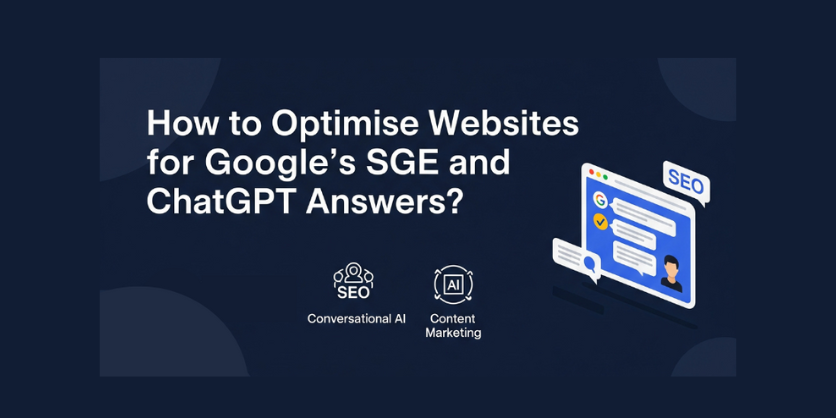
What are Google’s SGE and ChatGPT Answers?
The way people were getting the answers to their queries has changed, and now people are getting a clear, helpful answer right away, without needing to click through a bunch of websites. It all became popular with AI’s involvement in search engines. And two popular platforms are:1. Google’s SGE (Search Generative Experience)
Google Search Generative Experience (SGE) or AI Overview is a modern version of Google Search. Instead of just showing you a list of links, it uses AI to summarise the best answers from across the web and presents them right at the top of your search results. It’s like having a smart assistant that reads everything for you and gives you the highlights. For example, if you search “best indoor plants for low light,” SGE might show you a short list of top plants, why they’re great, and even tips on how to care for them, all pulled from trusted sources. It’s designed to save time, simplify complex topics, and make search feel more like a conversation.2. ChatGPT Answers
ChatGPT Answers is more like chatting with an answering machine. You ask a question, and it gives you a custom-written response based on everything it’s learned. It doesn’t just pull from one website; it generates a fresh answer using patterns from a huge amount of information. For example, if you asked ChatGPT, “How do I start a blog?” it might walk you through the steps, suggest platforms, and even help you brainstorm blog names, all in one go. There are many more, but these two are popular among them. Both tools are changing the way people find and engage with information. And for website owners, this means it’s time to rethink how content in SEO is written and structured, because the AI era of search has already arrived.Strategies to Optimise Your Website for AI Search (SGE and ChatGPT)
Here are some strategies to optimise your website for AI Search1. Start with Solid SEO Foundations
Traditional SEO isn’t going anywhere; it’s just evolving. Make sure your site has:- Clear keyword targeting: Just like old days, pick relevant keywords along with some long-tail keywords, and relative keywords, and include them in your content organically. While doing that, take care of keyword density and distribution as well.
- Fast loading speeds: People don’t like slow-loading pages, not just people, but AI and algorithms also don’t like slow-loading pages. So, improve the page loading speed.
- Mobile-friendly design: With mobile users dominating traffic, your site must adapt to every screen. Use responsive layouts, easy-to-tap buttons, and avoid intrusive popups. A smooth mobile experience isn’t optional; it’s expected.
- Clean internal linking: Make your content easier to navigate by guiding users (and crawlers) with clear, contextual internal links. Avoid clutter, ensure each link adds value, and create a logical path through your website.
- Descriptive meta titles and tags: Think of your meta tags as invitations. Write compelling, keyword-rich titles and descriptions that reflect the content and encourage clicks. They’re your first impression in search results, make it count.
2. Create and Publish Content Smartly
AI-generated responses prioritise content that’s clear, helpful, and human-sounding. Use a conversational tone, answer common questions, and avoid jargon. Keep is beginner-friendly. While creating content, take care of the following things:a. Structure Content for AI Summarisation
Create a good format and distribute the content smartly:- Use headings (H2, H3) to organize ideas
- Include bullet points and numbered lists
- Add FAQs and “People Also Ask” style sections
b. Focus on Search Intent
Understand what users are really looking for. Are they researching? Comparing? Ready to buy? Tailor your content to match that intent, and you’ll be more likely to show up in AI Search results or AI-generated responses.c. Demonstrate E-E-A-T
Google Search Engine, as well as AI search tools, loves content that shows:- Experience
- Expertise
- Authoritativeness
- Trustworthiness
d. Your Content should go beyond the Basics
Platforms like ChatGPT are great at answering simple questions, but they include more than just answers. So your content should:- Offer unique insights or opinions
- Include case studies or real-life examples
- Dive deeper into niche topics
e. Diversify Your Content Formats
AI pulls from more than just blog posts. Include:- Videos (transcripts)
- Infographics
- Podcasts
- Visual guides
f. Optimize for Conversational Queries
People are searching more like they talk. Use natural language and long-tail keywords like:- “What’s the best way to ________?”
- “How do I start _______?”
- “Tips for beginners in _______”