

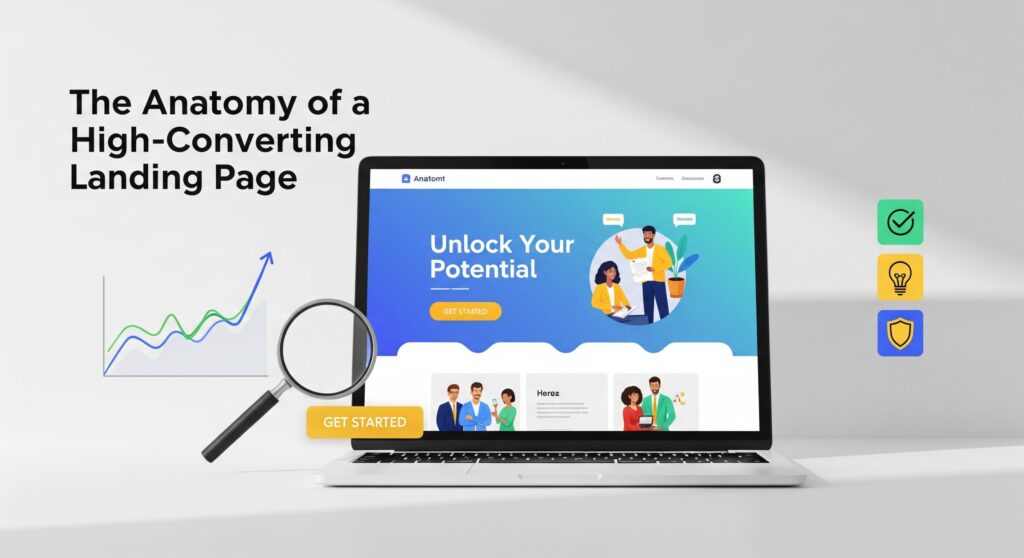
Which Elements are Vital in Making a High-Converting Landing Page?
The typical anatomy of a landing page includes placing a clear headline and subheader. The landing page should include the main microcopy or the creative that informs users about the service or products. The landing page should have the primary form and primary CTAs visible to the viewers. In addition, the landing page should include the features and benefits so that customers can comprehend what pain points your product will solve. It is a good practice to include social proof in the form of reviews or testimonials from other customers. Landing pages are an effective conversion rate optimisation strategy for marketers and businesses. There are primarily two types of landing pages, which include lead generation landing pages and click-through landing pages. A click-through landing page is where you can fulfil the conversion goal using the landing page as a standalone call to action. The click-through landing page redirects users to click through to another page. On the other hand, the lead generation landing page includes a form for capturing contact information from visitors, usually in exchange for a reward, which can be a discount code. Let us dive into understanding the elements that make up a high-converting landing page –Hero Section
The Hero section in your landing page mainly focuses on capturing the viewers’ attention. It is the topmost area of your landing page, which includes a headline, a short description and a call-to-action button. Some companies add the customer logos inside the hero section of their landing page. It shows that they have worked with well-known brands or have a strong client who uses their products. You can include your company’s logo in the hero section if there is no navigation bar present. The goal of the hero section is to provide information about your product or service, highlighting its advantages and encouraging visitors to take action. You can add a microcopy in your hero section that delivers a core message or shows your USP (highlighting product or service).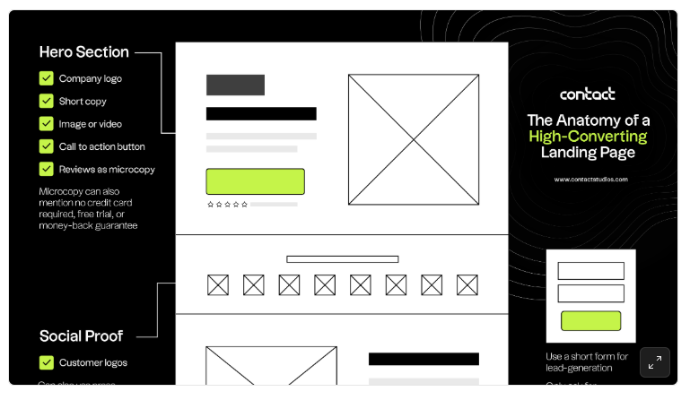 (Source: Figma)