


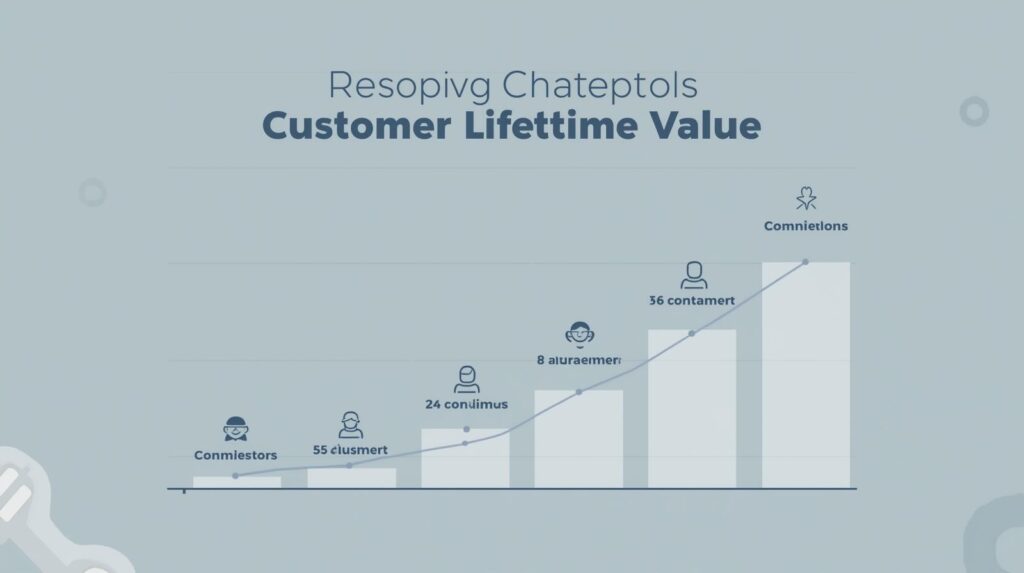
What is meant by Customer Lifetime Value?
CLV or customer lifetime value is a predictive tool that is being used to predict the total business that a consumer can generate for a brand. If a brand has a higher LTV it means that it has a product and marketing strategy which is a perfect market fit. On the other hand, a lower LTV reflects that there is a need for the brand to work on its product and marketing approaches. However, collecting data for predicting a Customer’s Lifetime Value requires an expert understanding and market knowledge to ensure accuracy.Benefits of Customer Lifetime Value for Performance Marketers
- Delivers a Ground Reality Check for the brands:
- Defines the way your brand or marketer thinks:
- Better Plan on Short-term and Long-term Goals:
- Plan on your band growth needs/focus:
- Improved Customer Relationships:
How to calculate CLV?
However, to enjoy the defined benefits of CLV the performance marketer needs to adopt a relevant approach for calculating CLV. Step 1: Forecast the customer’s lifetime and expected touchpoints: The initial stage is to predict the maximum time a customer would spend with your brand. Such can be predicted with the help of previous data records that the brand has. Also, such an estimate can be made by focusing on the expected touchpoints for your customer. It can either be the brand’s website, the social media platform, or any other digital platform. Step 2: Calculate and predict the average transactions associated with a customer: The next stage is to estimate and assume the lifetime transactions that a customer would make if stay associated with the brand. The transaction volume is heavily based on the nature/type of product the brand is dealing with. Step 3: Estimate and predict the results: Further based on the conducted analysis, the performance marketers estimate the lifetime value/results that a customer would spend on the brand. Such an estimation is done by calculating the average cost of goods with the total number of estimated transactions that a consumer makes. Step 4: Evaluate the lifetime value associated: The final estimation can be made after making relevant adjustments to the estimated values. Such adjustments are made to ensure that any potential change or error can be eliminated from the final amount. Various detailed/specific elements are further followed throughout the above process. The above-mentioned steps are just a brief of the overall calculation adopted. Hence, you need to consult with a leading performance marketing company in India to learn more about such a process in-depth.Tips to improve your brand CLV
The above information may have provided you with relevant information regarding how to calculate customer lifetime value and its potential impacts on a brand. But, in case you have a lower CLV, there are certain approaches that you can rely on for improving it.- Focus more on customer relationships:
- Consider the fulfilment of transactions/sales:
- Stress on Feedback and Reviews:
- Invest in product advancement and technological upgrades:
- Consider your ticket value: